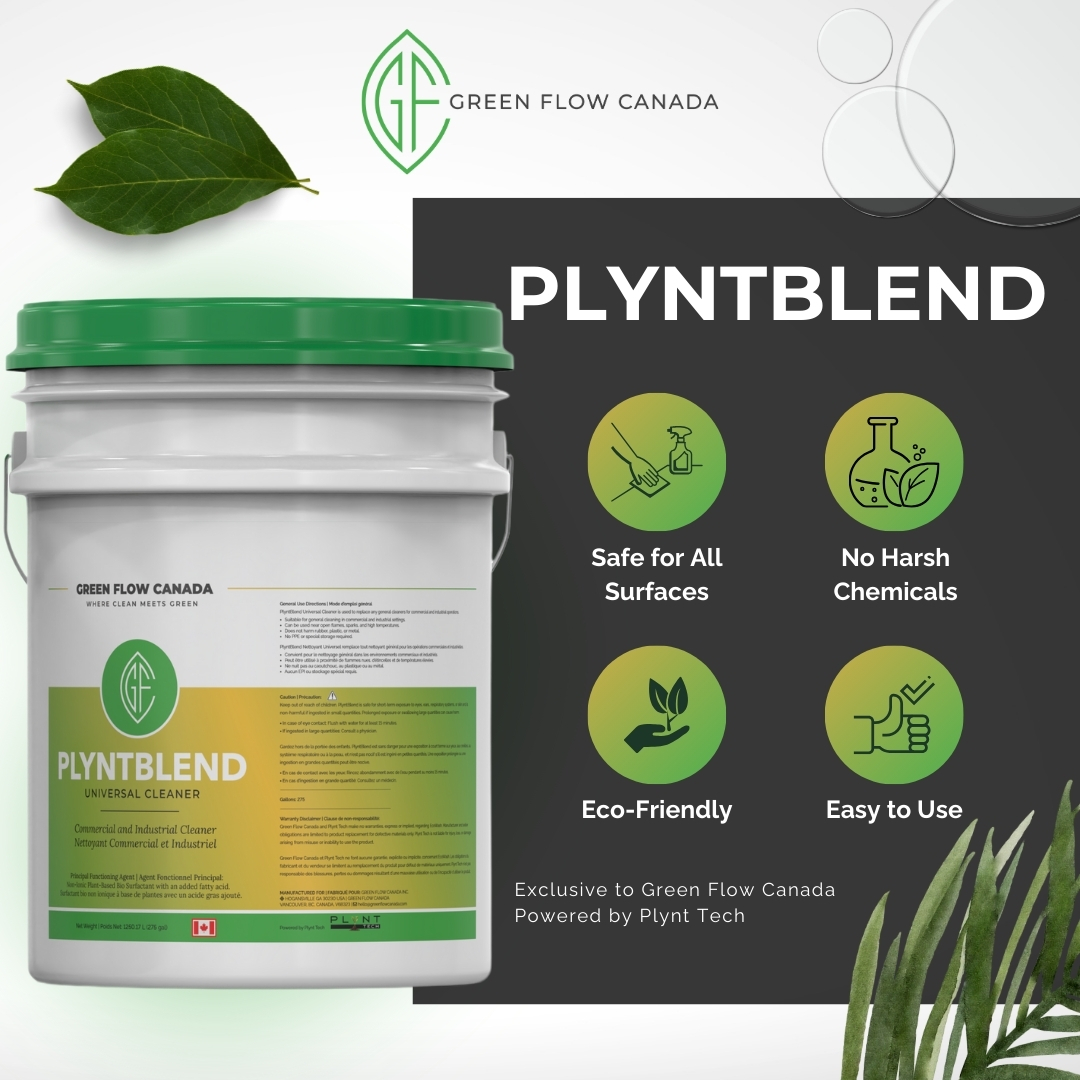
Every Green Flow product carries the same line in Section 2 of its Safety Data Sheet: not classified. Buyers ask what that actually means, and whether they can rely on it. Here's the plain-language version.
Where the Classification Comes From
WHMIS is Canada's system for communicating workplace chemical hazards. The classification rules sit in the Hazardous Products Regulations (HPR), which set criteria for physical hazards (such as flammability) and health hazards (such as skin or eye irritation).
A supplier assesses the product against each hazard class. If it meets a class's criteria, the product is classified for that hazard, and the label and SDS must show the matching pictograms, signal word and statements. If it meets none, it's not classified.
Where to Find It on the SDS
A Canadian SDS has 16 sections. For a substitution decision, four do most of the work:
- Section 2, Hazard identification: the classification itself.
- Section 8, Exposure controls: what protection normal use calls for.
- Section 9, Physical and chemical properties: flash point, pH, appearance.
- Section 14, Transport information: whether it ships as dangerous goods.
What It Means, and What It Doesn't
It means the product didn't meet any HPR hazard-class criteria when it was assessed, so there are no hazard pictograms on the label.
It doesn't mean:
- "Non-toxic" or "harmless." Those aren't measured properties, and we don't use them. Any product can cause irritation if it's misused.
- That handling rules disappear. Follow the first-aid (Section 4) and handling and storage (Section 7) guidance, and your site's own procedures.
- Anything about the environment. Environmental information lives in Section 12. For Green Flow products, that section is where "readily biodegradable" and "not classified as hazardous to aquatic life" come from.
Using It in a Substitution File
For each product you're comparing, record:
- Product name and SDS issue date.
- The Section 2 classification, quoted exactly.
- Flash point (Section 9) and PPE for normal use (Section 8).
- Transport status (Section 14).
- Where the SDS is stored for your team.
That gives your EHS lead, your procurement team and your auditor the same answer from the same document.
Browse every Safety Data Sheet in the SDS Library.
Product claims in this article come from the product's Safety Data Sheet or the documents linked above.