
60+
Metals and volatile organic compounds tested. Every result below reportable limits.
Also screened for pesticides, PCBs and cyanide by a NELAC-accredited laboratory.
Every environmental claim on this page traces to a Safety Data Sheet, a lab report or a certification. Where we don't have the data yet, we say so.
'Eco-friendly' on a jug tells you nothing about what's inside it or where it ends up.
Logos and seals that were never earned by the product they're printed on.
Carbon-neutral and zero-waste claims with no published method behind them.
When a supplier's claim doesn't hold, it's your substitution memo and your ESG answer on the line.
Since June 2024, Canada's Competition Act has required a product's environmental claims to be based on adequate and proper testing. This page is built to that standard.
Test the product: biodegradability, aquatic toxicity, contaminant screening, certification.
Tie every claim to the document that proves it: the SDS, the lab report or the certificate.
Only then does it go on a label, a sales sheet or this page. If it isn't measured, it isn't said.
Readily biodegradable formula
Not classified as hazardous to aquatic life
Not classified as hazardous under WHMIS
Not flammable
Not regulated for transport (TDG)
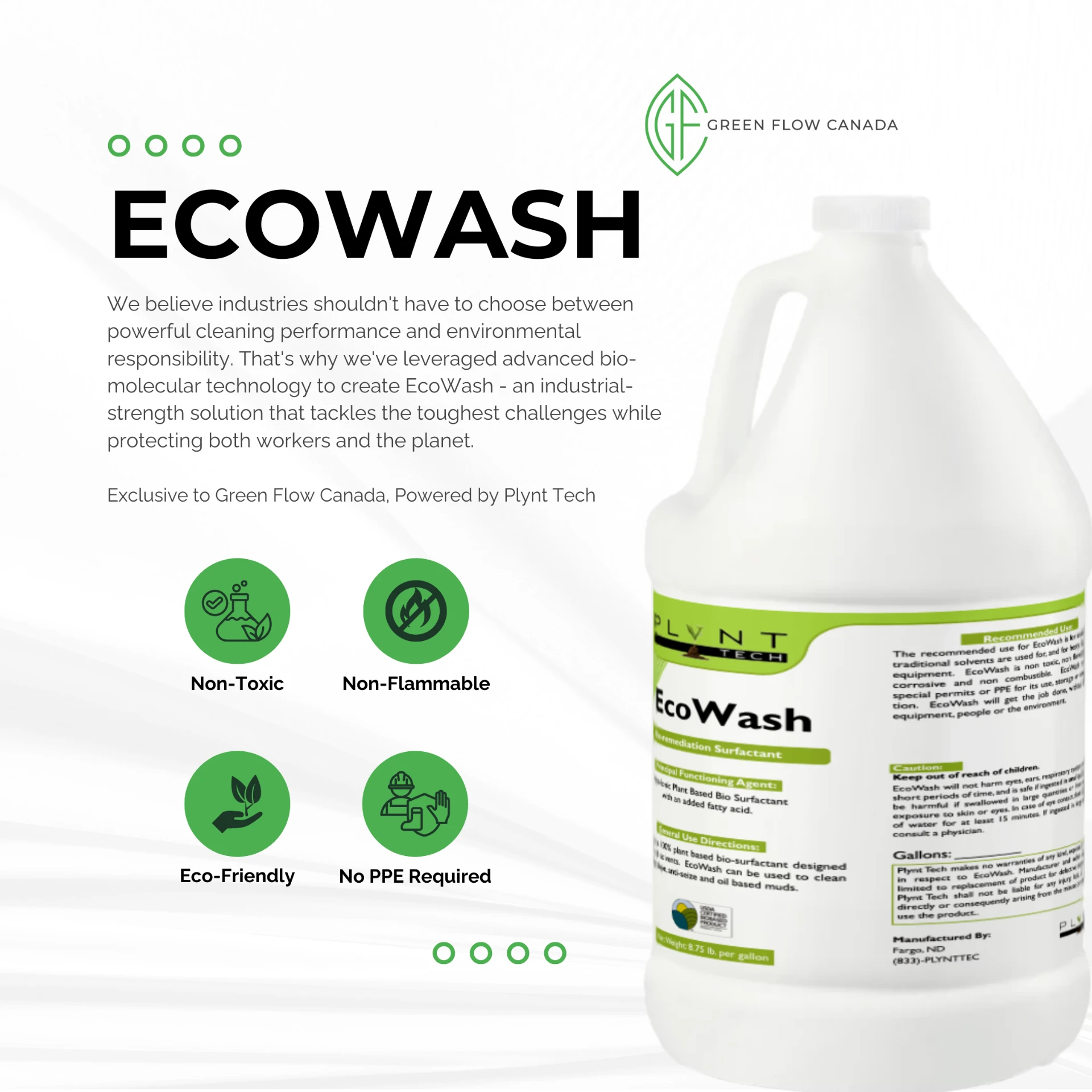
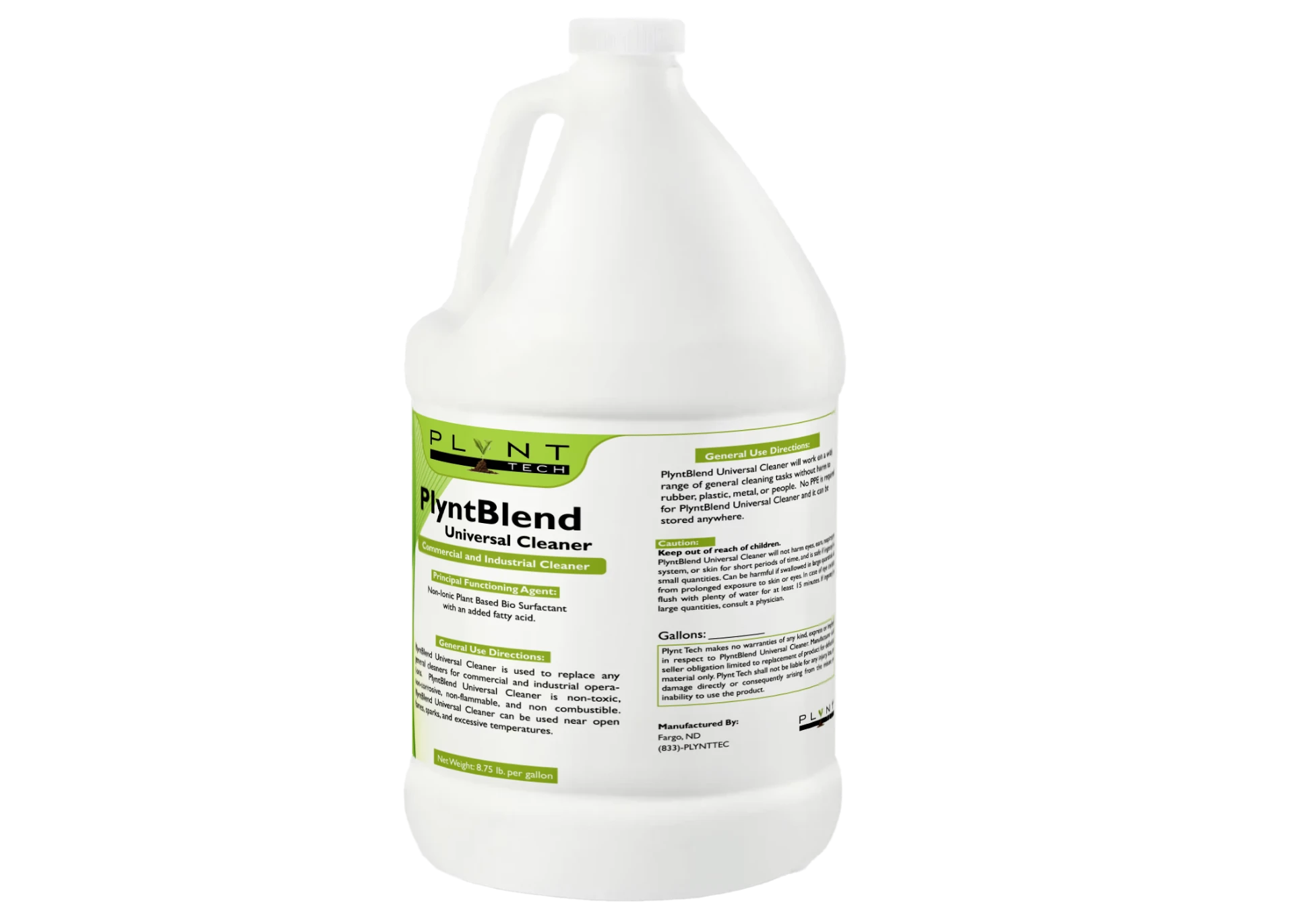
Plant-based surfactant
Independent lab testing: OECD 301B, aquatic toxicity, contaminant screen
USDA BioPreferred
✓ Documented · – Not yet documented (not a failed test).
Sources: product Safety Data Sheets (Canada HPR, January 2025), a PlyntTech-commissioned lab report (US, NELAC-accredited labs), and USDA BioPreferred certification.
Download every SDSThird-party laboratory analysis commissioned by PlyntTech.
60+
Metals and volatile organic compounds tested. Every result below reportable limits.
Also screened for pesticides, PCBs and cyanide by a NELAC-accredited laboratory.
61.7%
Biodegraded within 28 days (OECD 301B), meeting its ultimate-biodegradability classification.
Classified readily biodegradable on the Canadian Safety Data Sheet.
≈11×
Less toxic to fish than sodium lauryl sulfate (SLS), a surfactant in most conventional cleaners.
Mysid shrimp: ≈6.7× less toxic.
LC50: the concentration that affects half the test organisms. Higher is safer.
Testing conducted in the USA by PlyntTech with NELAC-accredited laboratories. Additional testing is underway in Canada.
Download the Case StudyNot Classified
Can take a WHMIS-classified product off your inventory.
Not Flammable
Nothing new for the flammables cabinet.
Not Regulated
Ships without dangerous-goods paperwork.
No PPE
Needed for normal use, per the SDS.
Results depend on what you're replacing. We don't publish reduction figures we haven't measured.
The fastest way to lose your trust would be to guess. So here's exactly where we stand.
USDA BioPreferred
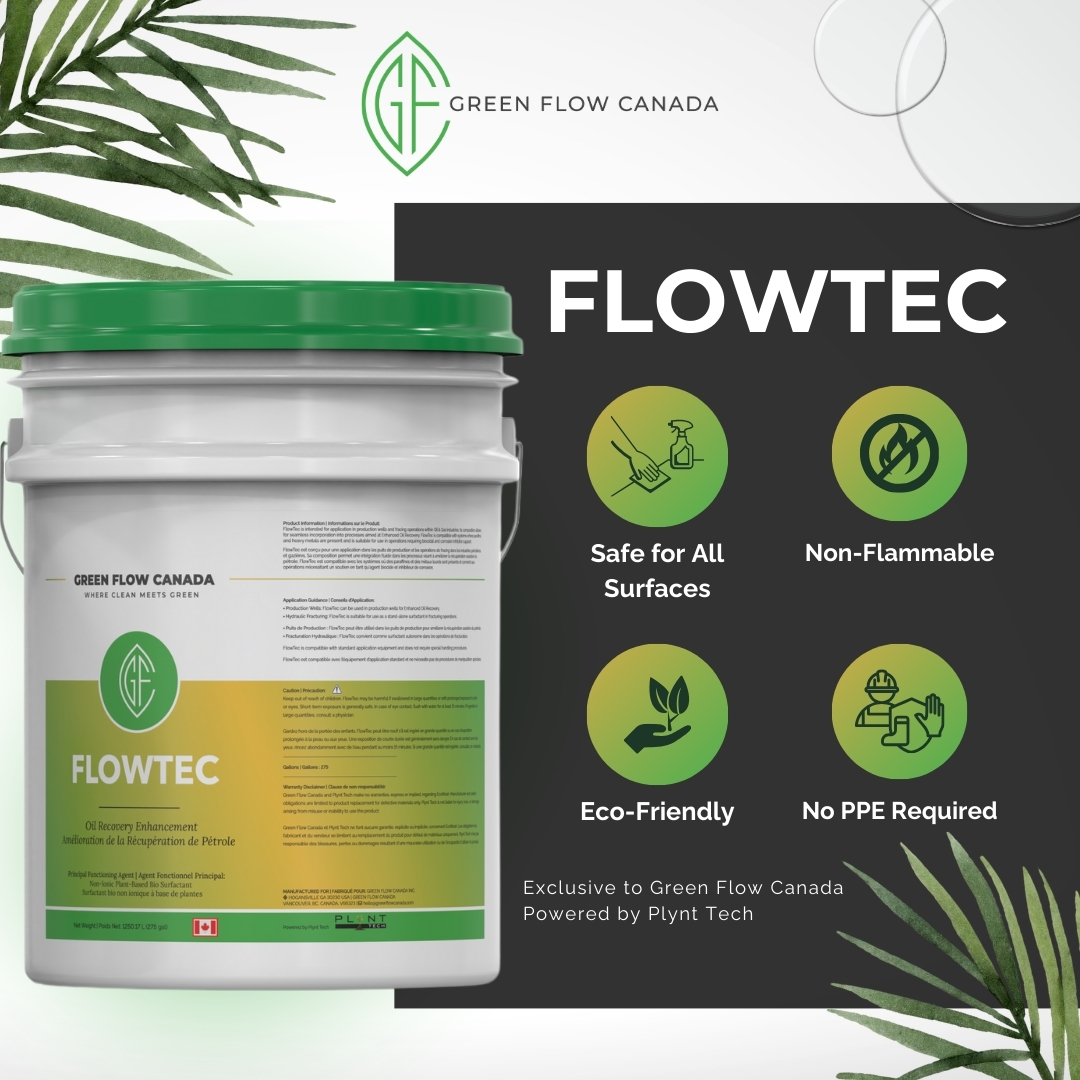
FlowTec
Our one third-party certification. We don't imply others.
SDS-backed claims
All four products
Biodegradability, classification and transport status, issued to Canada's Hazardous Products Regulations.
SDS LibraryCanadian eco-standard testing
Product line
Underway. We'll publish results when they're in, not before.
Carbon footprint
We haven't measured it, so we make no carbon-neutral, low-carbon or climate claim.
Packaging
No recyclability claim for pails, drums, totes or canisters yet.
Where it's made
Manufactured for Green Flow Canada in Hogansville, Georgia, USA.
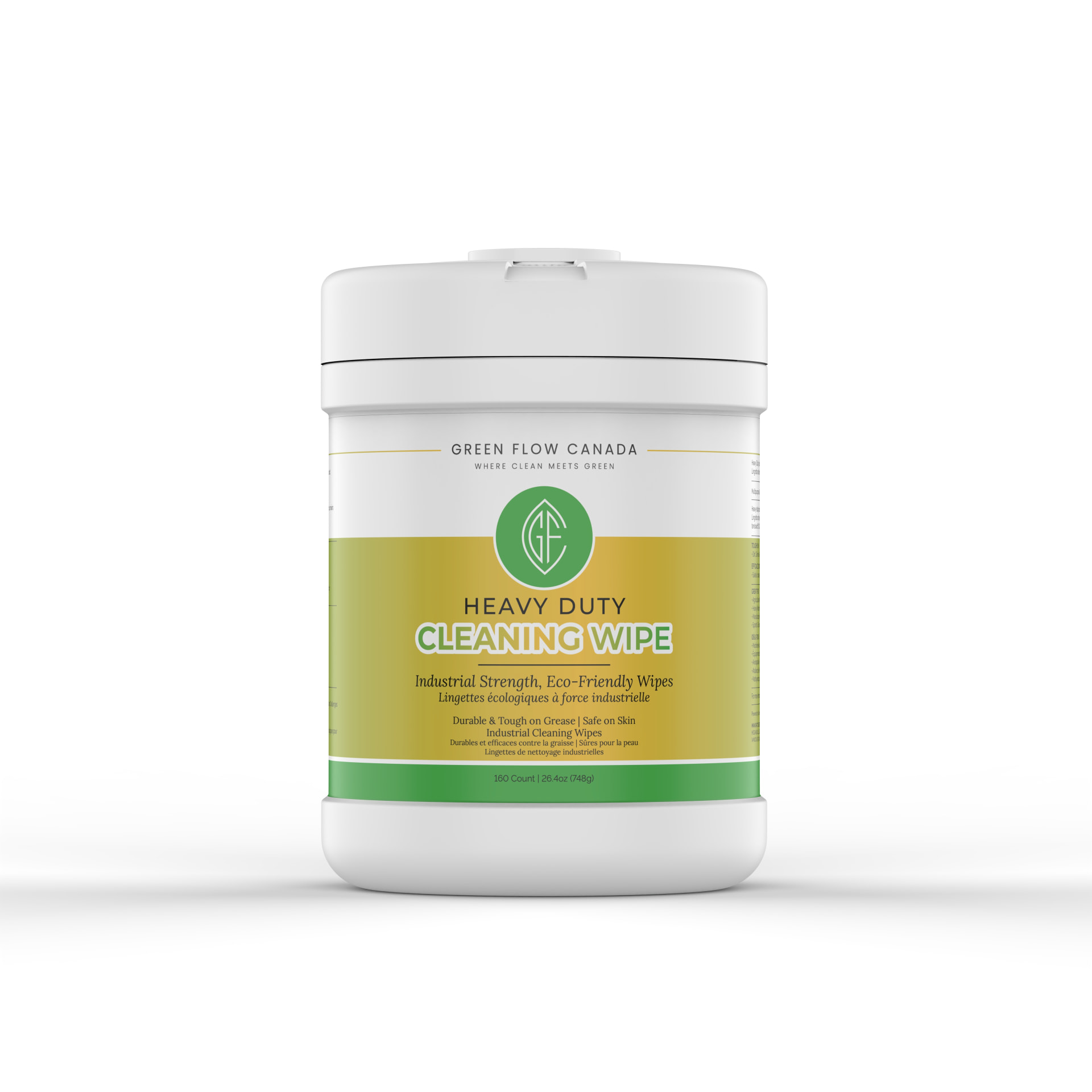
Heavy Duty Wipes
The formula is readily biodegradable. The polypropylene wipe is not. Dispose of it in the trash, and never flush it.
Start with a free sample kit and the documents behind it.
Sales@GreenFlowCanada.com · We typically respond within 24 hours.