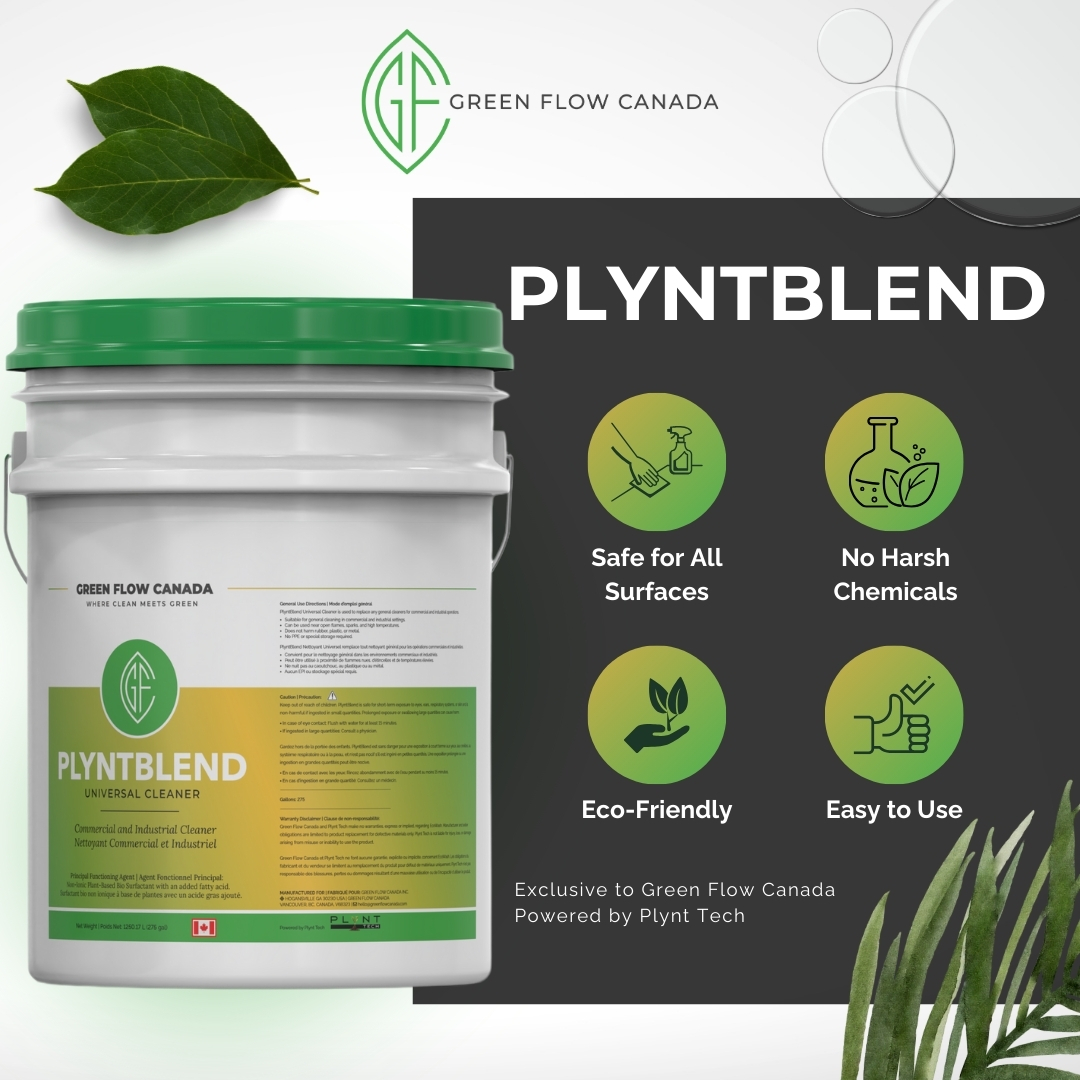
The testing was commissioned by PlyntTech and carried out in the USA by NELAC-accredited laboratories. Additional testing is underway in Canada.
1. The Contaminant Screen
What it measures: whether a product contains measurable amounts of specific substances that nobody wants in a cleaner.
The result: more than 60 metals and volatile organic compounds were tested, and every result was below reportable limits. PlyntBlend was also screened for pesticides, PCBs and cyanide.
2. Aquatic Toxicity (LC50)
What it measures: LC50 is the concentration of a substance that affects half of the test organisms in a set time. A higher LC50 means it takes more of the substance to have that effect, so higher is better.
The comparison: PlyntBlend was tested alongside sodium lauryl sulfate (SLS), a surfactant found in many conventional cleaners.
| Test organism | PlyntBlend LC50 | SLS LC50 | Difference |
|---|---|---|---|
| Inland silverside (fish) | 136.1 ppm | 12.19 ppm | about 11× less toxic |
| Mysid shrimp | 70.7 ppm | 10.53 ppm | about 6.7× less toxic |
"Less toxic than SLS" is a comparison, not a claim that PlyntBlend is non-toxic. That's why we report the numbers and not a label.
3. Biodegradation (OECD 301B)
What it measures: OECD 301B tracks how much of a substance microorganisms convert to carbon dioxide over 28 days. It's one of the standard tests used to decide whether a substance is readily biodegradable, and the pass level is 60%.
The result: PlyntBlend reached 61.7% biodegradation in 28 days. Its Canadian Safety Data Sheet classifies it as readily biodegradable.
What the Results Don't Cover
- Disinfection. PlyntBlend is a cleaner. It isn't registered as a disinfectant in Canada, and we make no germ-killing claims.
- Other products. These results are for PlyntBlend only. Other Green Flow products are described by their own SDSs.
- Canadian testing. The results above come from US laboratories. Testing in Canada is underway, and we'll publish those results when they're in.
See the full results, with a chart and table, on the PlyntBlend page.
Product claims in this article come from the product's Safety Data Sheet or the documents linked above.