Switching away from a solvent degreaser usually starts with a good reason: a flammables cabinet that's full, a crew tired of the fumes, or a procurement request to reduce hazardous products on site. It often ends with a half-used pail in the corner, because the replacement was never tested against a clear standard.
This checklist gives you that standard.
The Seven Questions
1. How is it classified? Open Section 2 of the Safety Data Sheet (SDS). Is the product classified under WHMIS, and for which hazards? Write it down for both products.
2. Is it flammable? Section 9 (physical properties) and Section 2 will tell you. A flammable product needs flammable storage; a non-flammable one doesn't.
3. What PPE does normal use require? Section 8 lists exposure controls. Compare what your crew has to wear for each product during everyday use.
4. How does it ship? Section 14 covers transport. A product regulated as dangerous goods carries paperwork, placarding and training requirements that a non-regulated one doesn't.
5. Will it harm your materials? Check the label and SDS for compatibility with rubber, plastic, seals, paint and metals. Then test on an inconspicuous area of your actual equipment.
6. How is it applied? Note the dilution, the dwell time and the method: by hand, pressure washer or parts washer. A product that needs a longer dwell may still save time if it needs less scrubbing.
7. What happens afterwards? Rinse water and residue still have to go somewhere. Check Section 13 (disposal) and follow your local regulations. "Readily biodegradable" describes how a formula breaks down; it isn't permission to send it down any drain.
Running a Fair Side-by-Side Test
- Pick one real job: the same part, the same soil, the same temperature.
- Use each product exactly as its label directs, including dilution.
- Time the dwell and the scrubbing. Count the rinses.
- Photograph the result under the same light.
- Ask the person doing the work which product they'd reach for next time.
Run it more than once. One good result is an anecdote; three is a pattern.
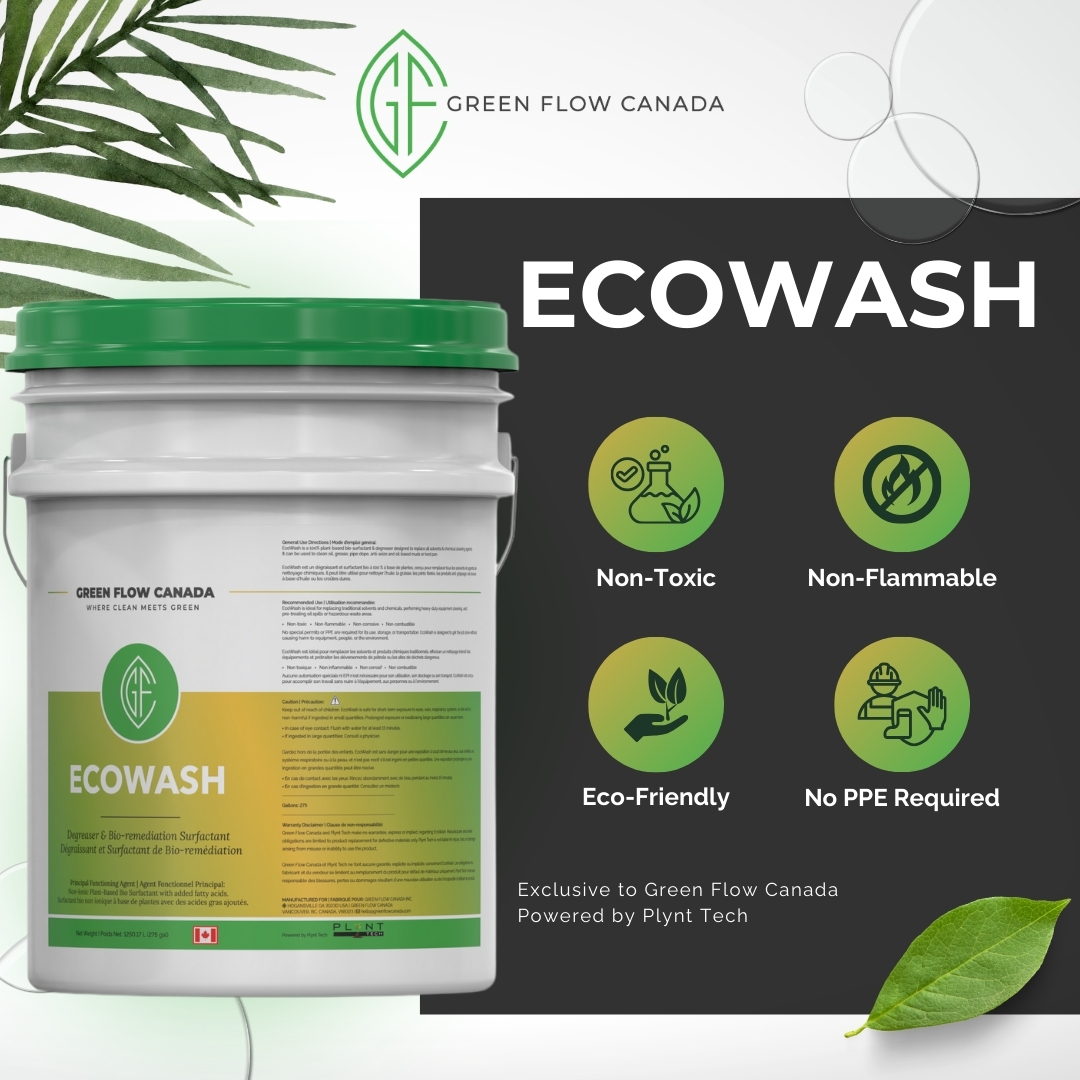
How EcoWash Answers the Checklist
| Question | Typical solvent / caustic degreaser | EcoWash |
|---|---|---|
| Classification | Hazard pictograms often required | Not classified |
| Flammability | Often flammable | Not flammable |
| PPE (normal use) | Gloves, goggles, respirator often required | Not required |
| Transport | Often regulated as dangerous goods | Not regulated |
| pH | Often caustic or acidic | Neutral |
| Breakdown | Often persistent | Readily biodegradable |
EcoWash is applied by hand or through a pressure washer at 4:1, and it comes in 5-gallon pails (22.73 L) and 275-gallon totes.
The best substitution is the one your crew keeps using. Test it on your toughest job first.
Product claims in this article come from the product's Safety Data Sheet or the documents linked above.